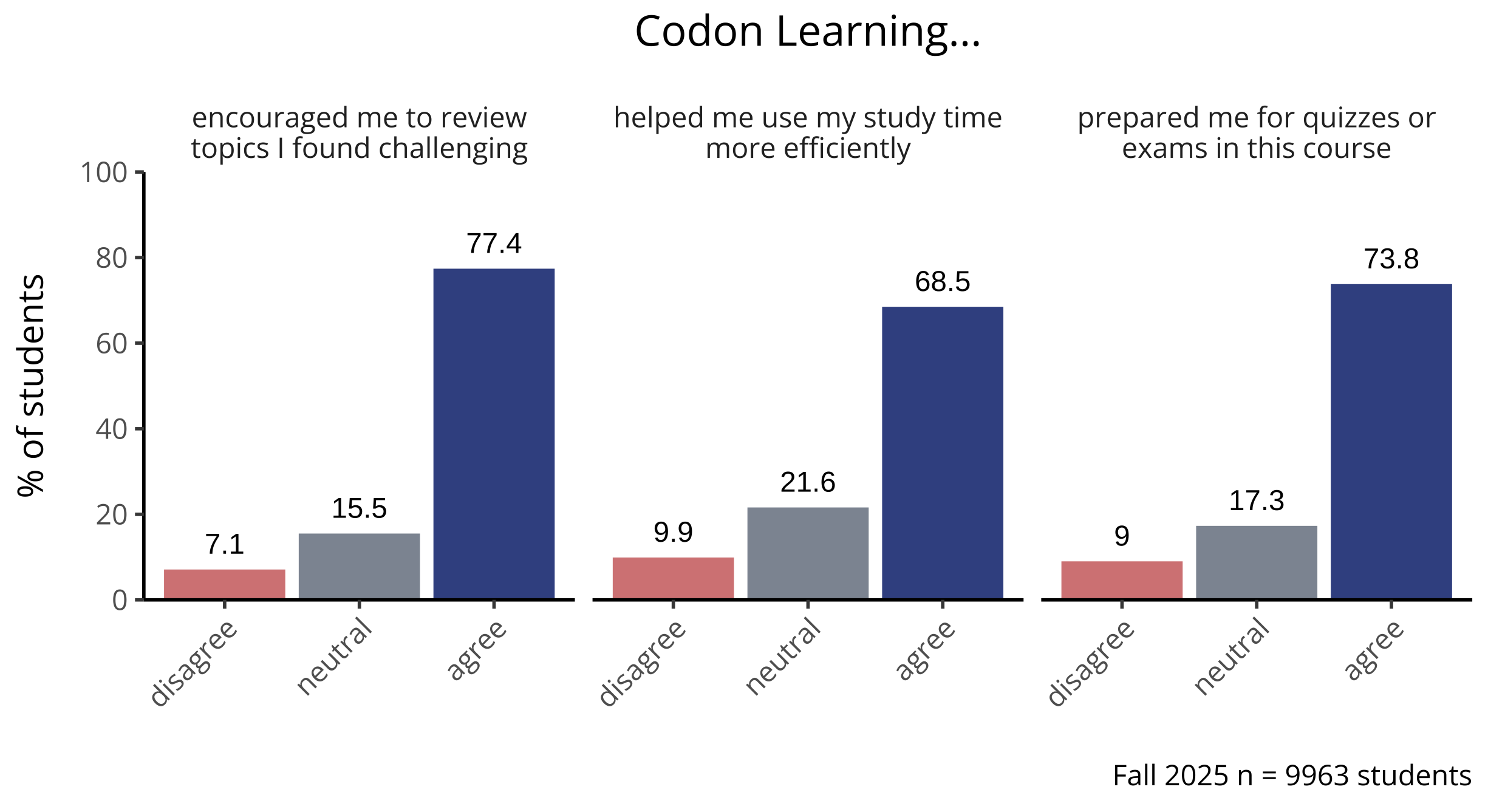
Evidence drives every step of Codon’s product design, from designs grounded in peer-reviewed literature to evaluation of our real-world impacts.
High-structure course design cuts student failure (DFW) rates by roughly half in introductory biology (Freeman et al. 2014). So we designed the Codon platform to help instructors design courses where students complete interactive readings before class, engage in active learning in class, and get feedback on homework problems after class.
We hypothesized that by also addressing gaps in student metacognition and study skills, we could boost learning in introductory biology above and beyond the gains from high-structure. We designed the Study Path to help novice learners use evidence-based study strategies.
What have we found?
Codon’s IRB-approved studies
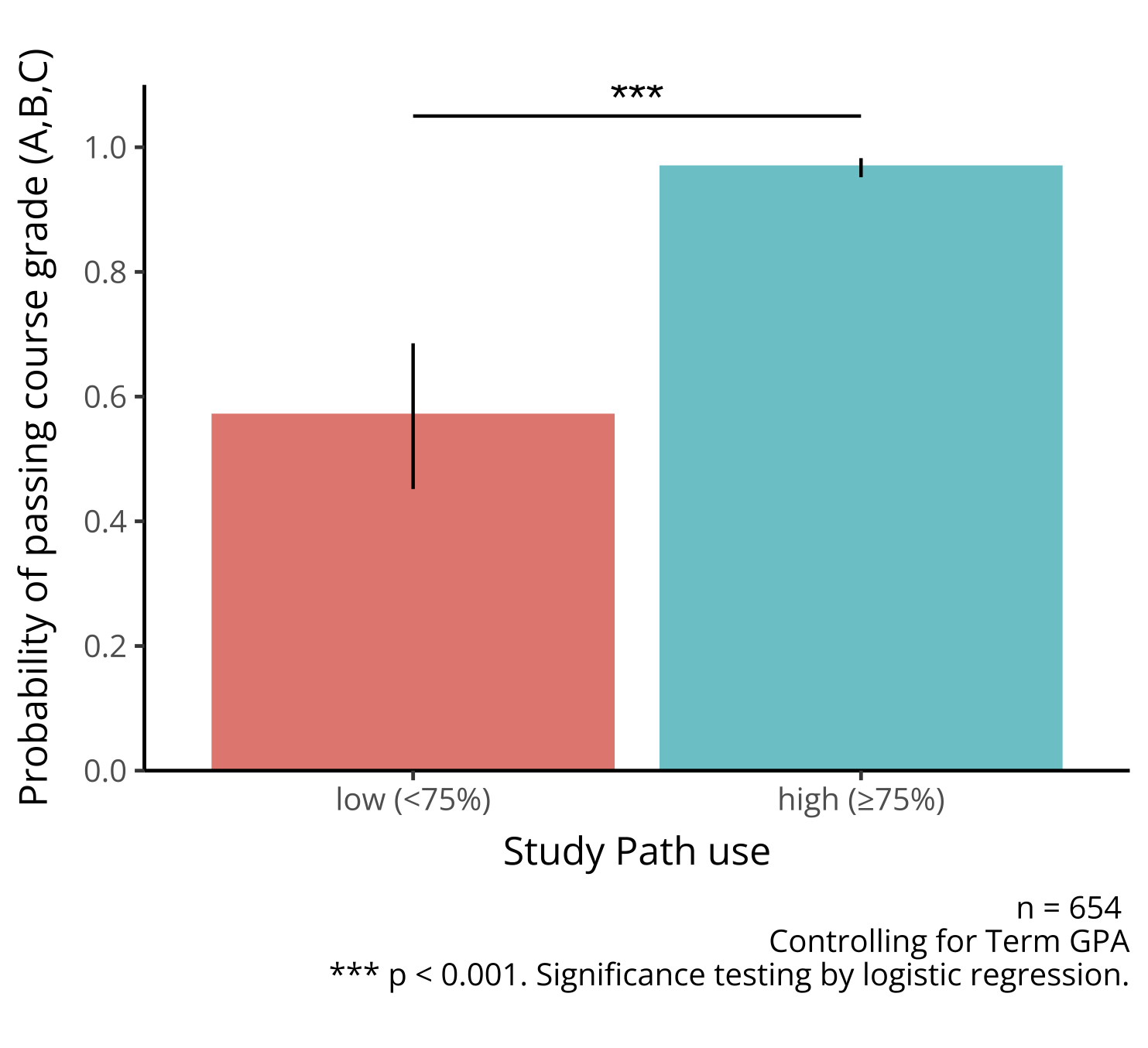
Study #1: The Study Path dramatically reduces failure rates in a high structure course.
In an Introduction to Molecular and Cell Biology course made up of largely first-semester Freshman, students who did not use the Study Path had a roughly 60% chance of passing. Controlling for their grades in other courses that same semester, using the Study Path predicted a near guarantee that they would pass.
Study in collaboration with Drs. Emma Feeney, Shauna Price, and Kristin de Nesnera at the Loyola University of Chicago. Data collected Fall 2024 and Fall 2025.
Study #2: The Study Path helps less-prepared students catch up with their peers.
To measure incoming preparation, students took a pre-test (GCA) in Week 1 of their Introductory Genetics course. We then tracked how students’ use of the Study Path for each exam predicted their score on that exam. Less-prepared students had just over a 50% chance of earning a passing exam score when they used the Study Path infrequently (left side). When students used the Study Path regularly, gaps in passing rates were greatly reduced between students with different levels of preparation (right side).
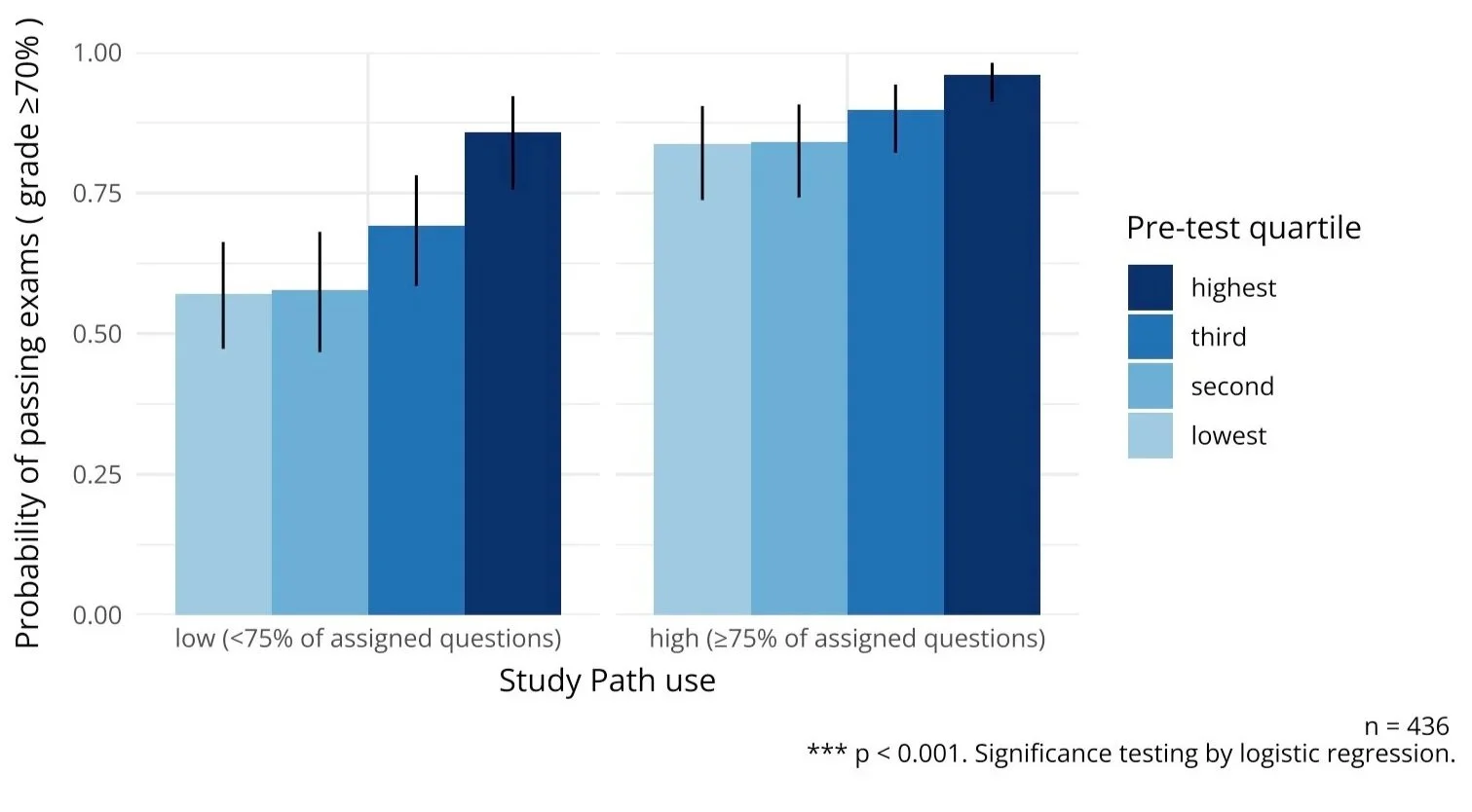
The analysis includes data across three semesters in a first-year Molecular Biology and Genetics course. See full study here: Hazlett, Z. S., Jimenez, P. C., & Knight, J. K. (2025). Self-Testing and Follow-Through of Learning Strategies Supports Student Success. CBE—Life Sciences Education, 24(1), ar16.

The Study Path improves course grades for all students.
Data from the same study reveal that high Study Path use leads to improved learning outcomes for all students, regardless of prior preparation (Figure 2). Here, we disaggregated student data by letter grade rather than a pass/no pass binary.
Program Evaluation
Work with our team of discipline-based education researchers to evaluate the impact of Codon in your course.
Let us help with your program evaluation. Our system helps you monitor student performance, metacognition, and study habits. Our team helps you wrangle the data.
Does the Study Path boost exam scores IN YOUR CONTEXT?
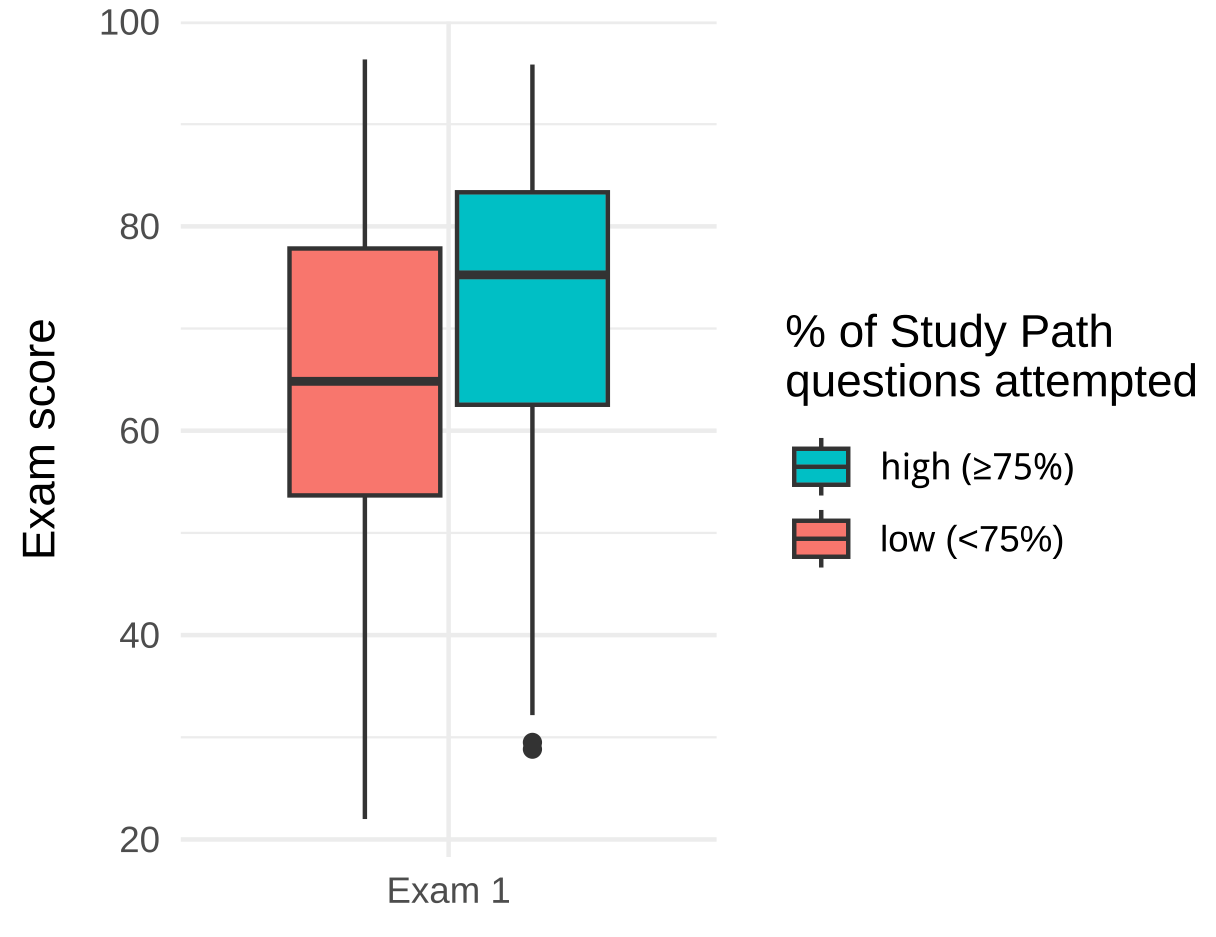
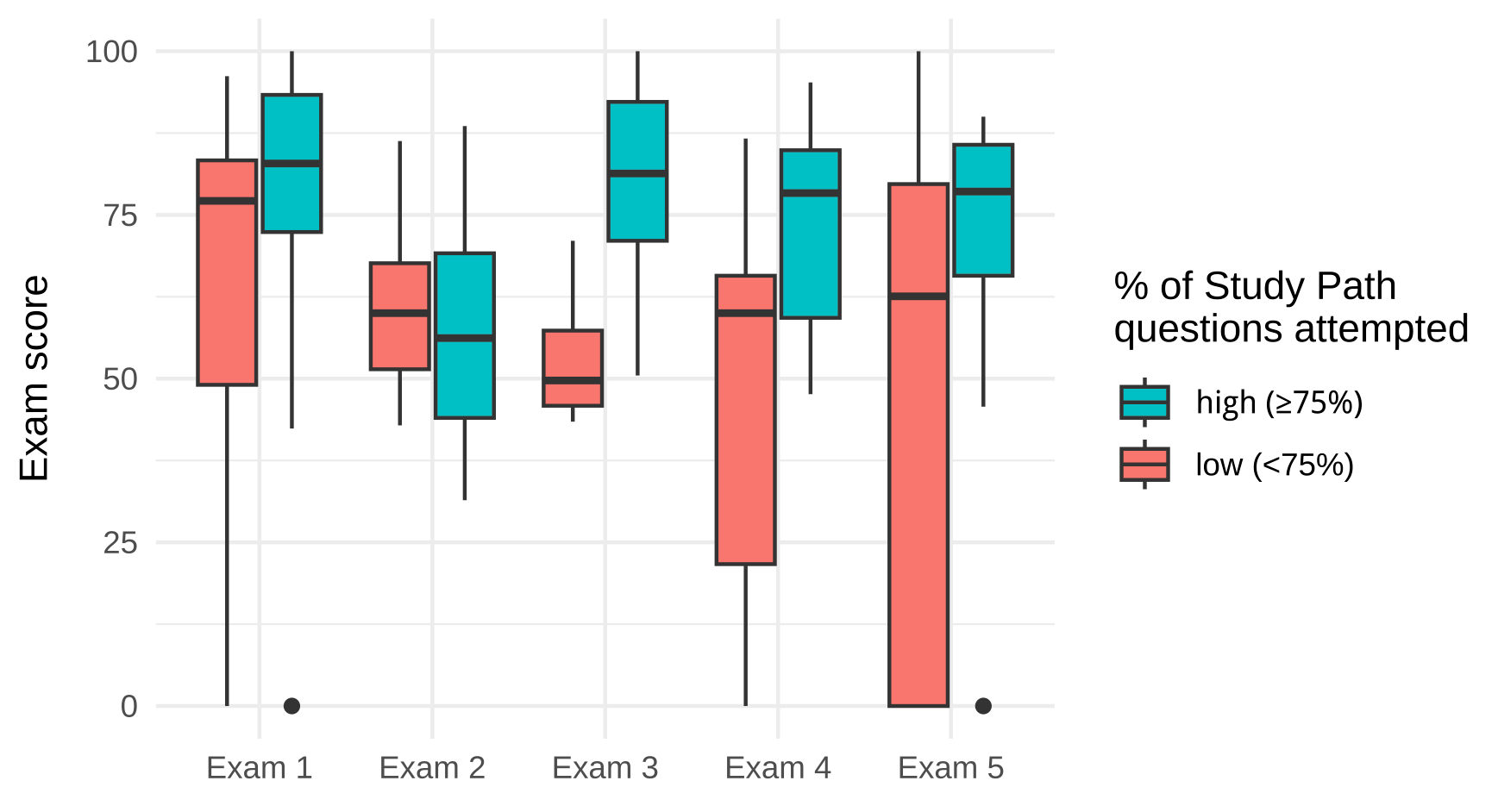
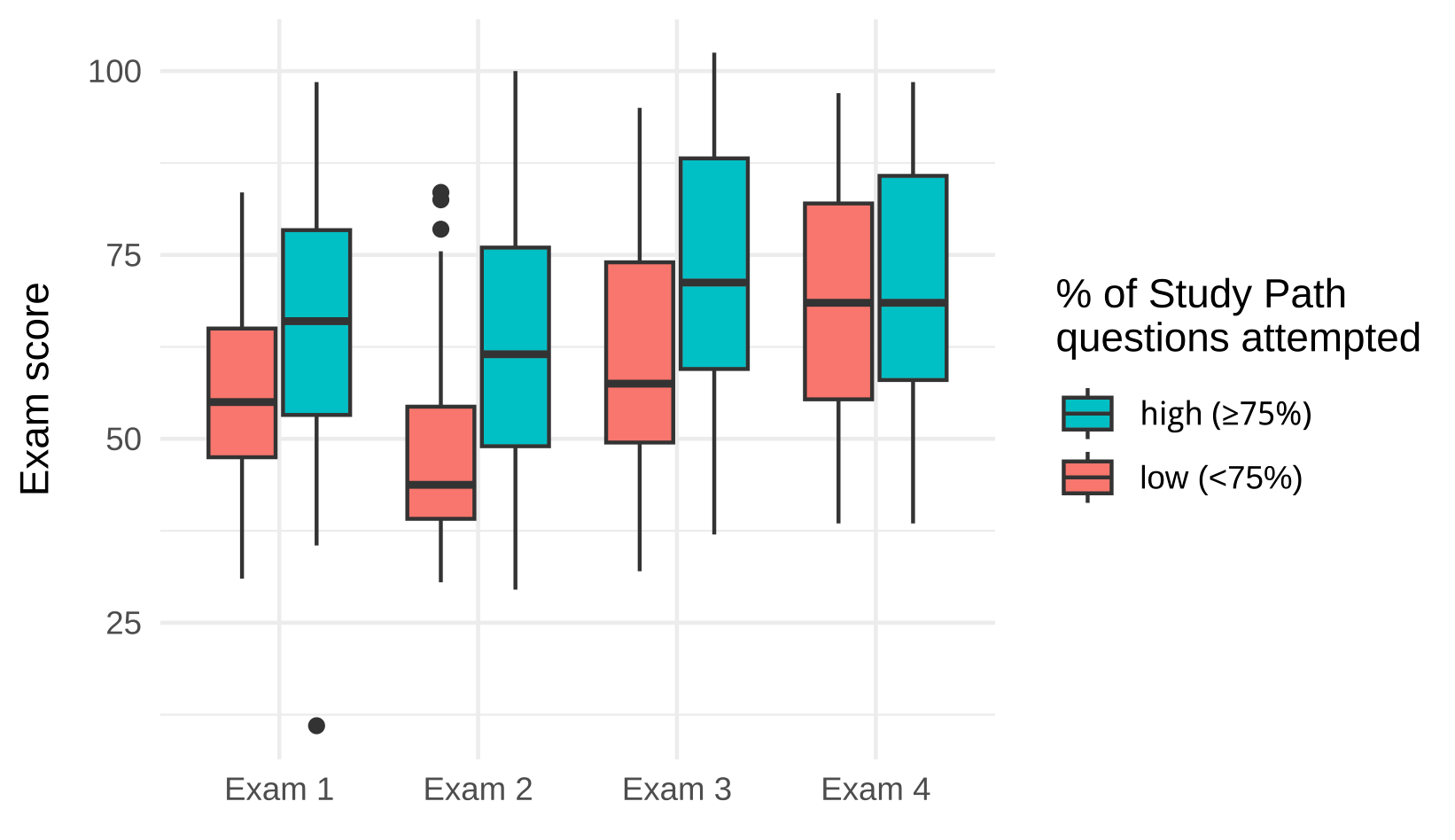
We consistently see exam scores boosted by at least half a letter grade among students who use the Study Path regularly. Anonymous trends shared with permission of the instructors.
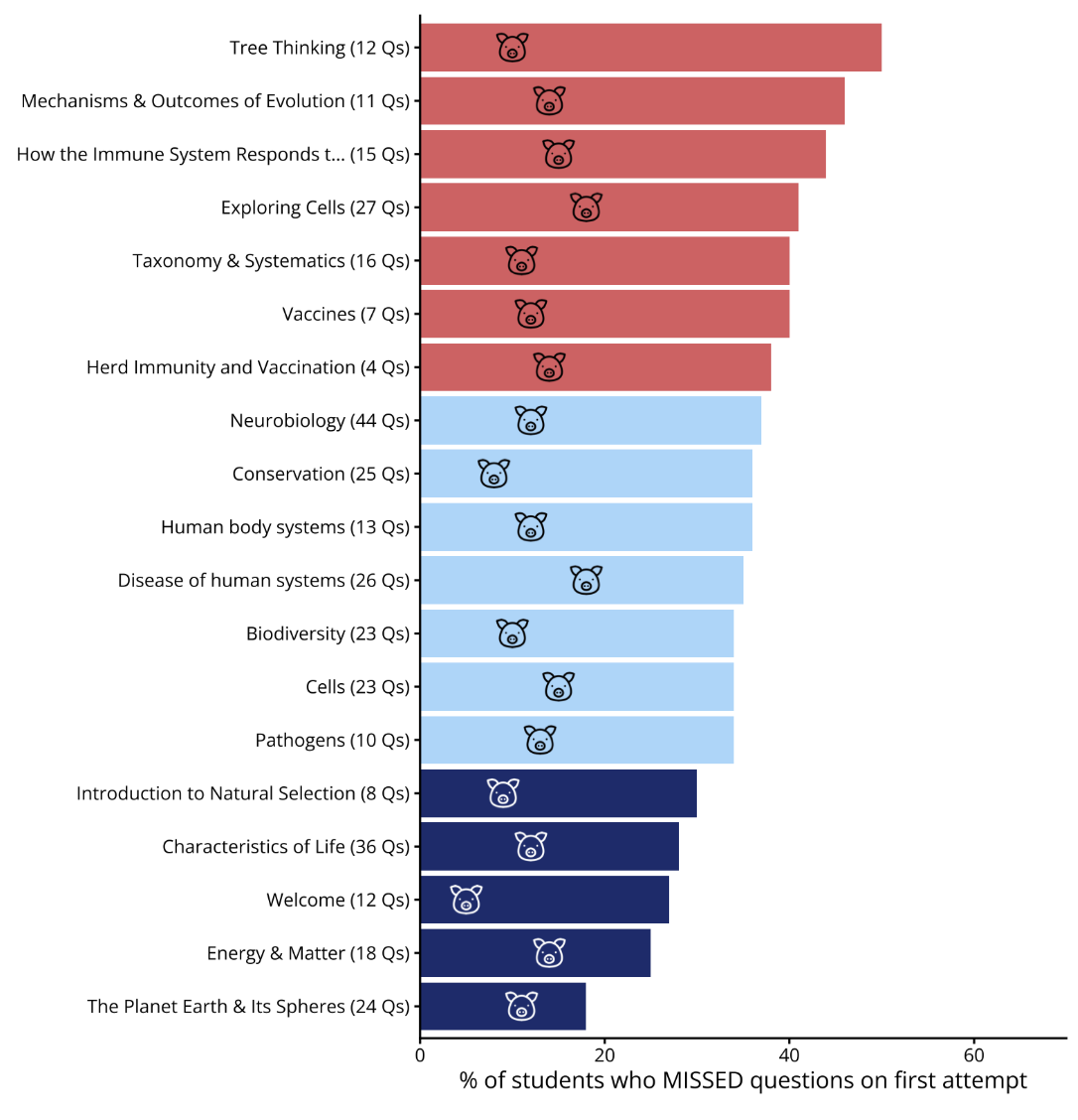
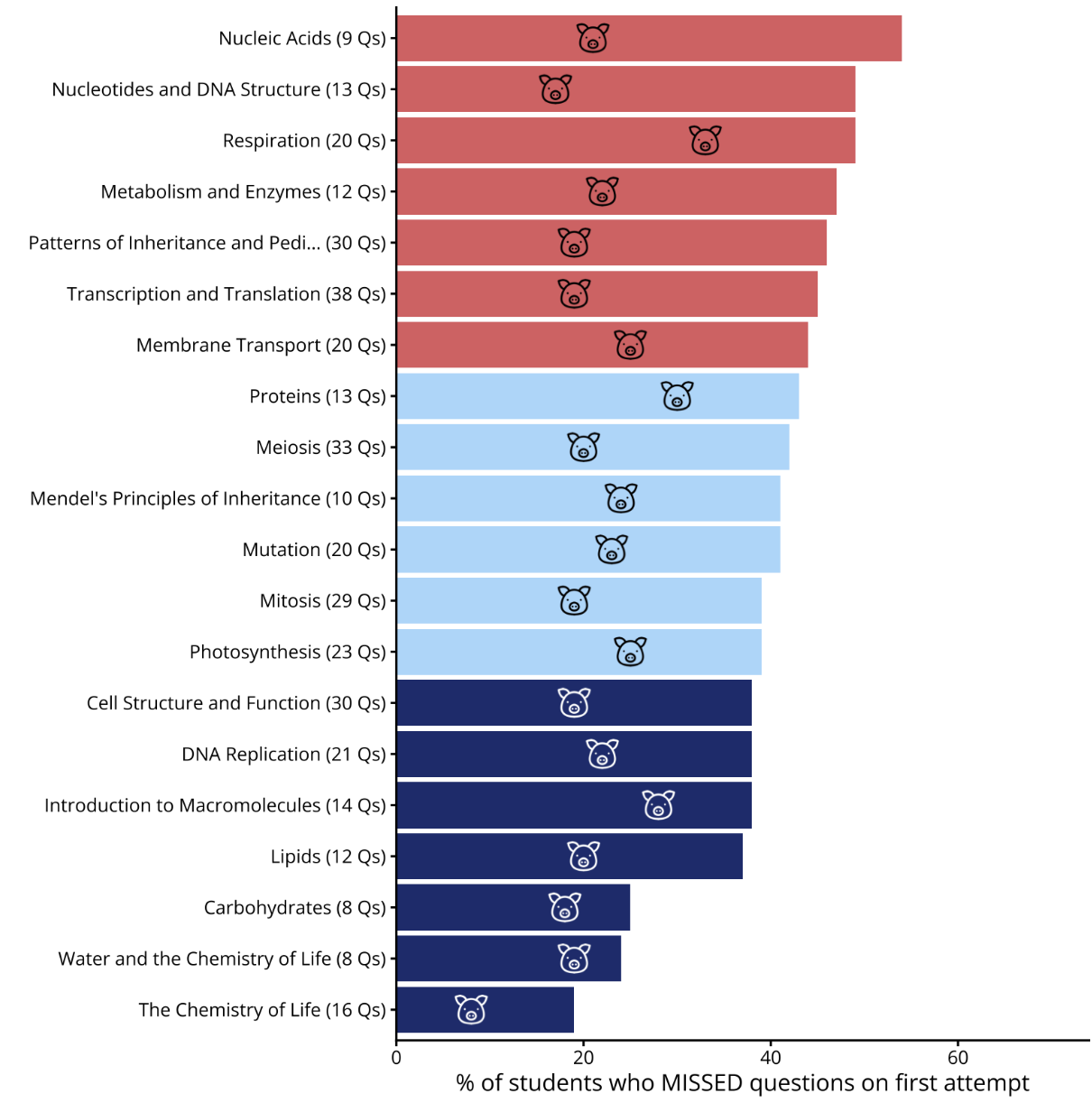
Where do students struggle in your curriculum?
Compare student performance with their confidence to identify priorities for updates and review.
More about our evidence-based product design
SElf-Regulated Learning
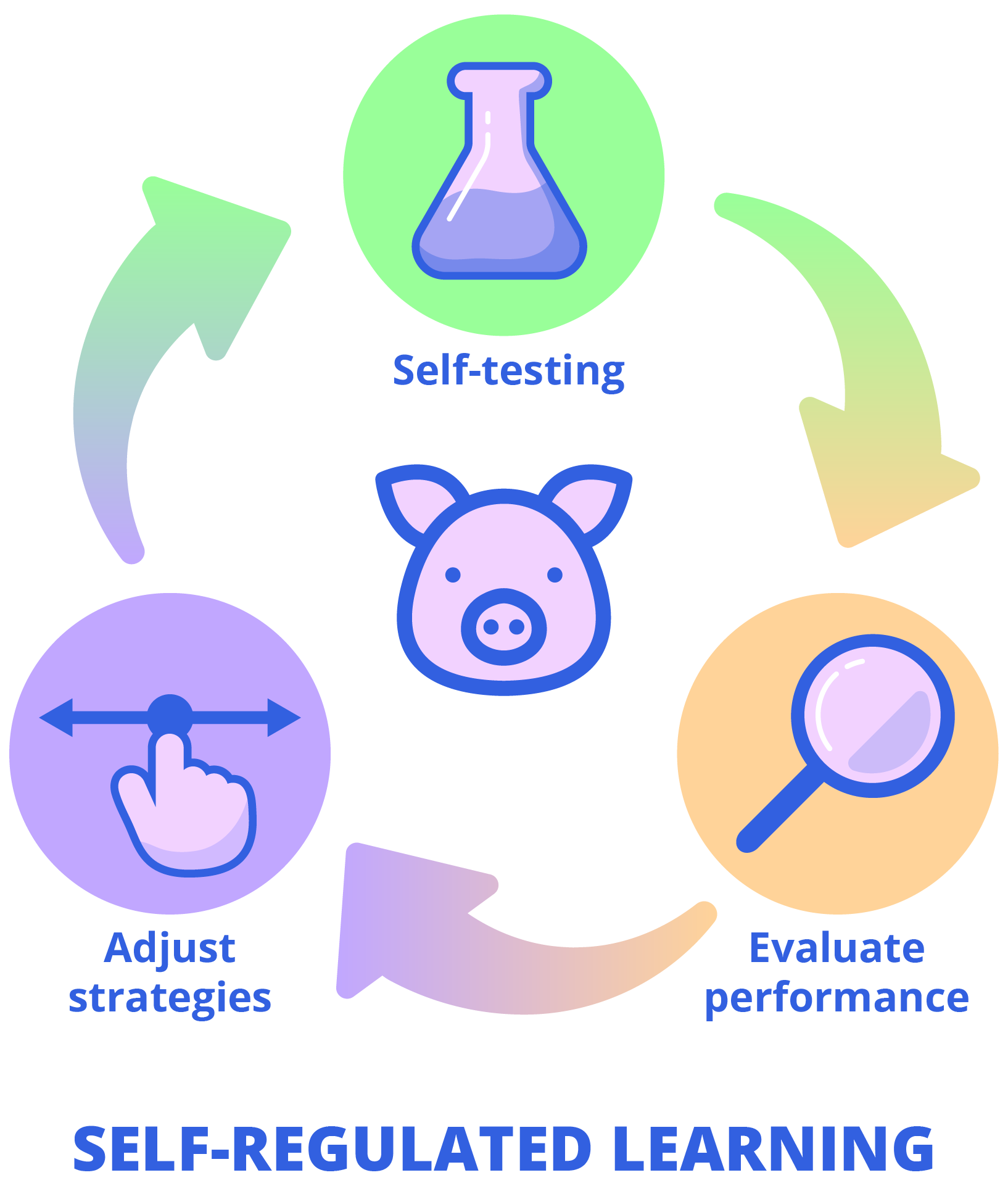
The Codon Learning Study Path was designed from scratch using evidence from the learning sciences to promote metacognition, self-testing, and spaced learning.
Self-testing and spaced learning have been shown to:
significantly boost student performance (Roedinger & Pyc 2012; Dunlosky et al. 2013).
Decades of research have shown that learners with self-regulated learning skills are more likely to succeed in STEM courses. These skills:
support early academic success and long-term persistence in STEM (Sebesta and Speth, 2017; Rodriguez, et al., 2018),
strengthen students’ ability to transfer their learning to new settings and events (Bransford, Brown, & Cocking, 2000; Barak, et al., 2016), and
improve student performance, especially for students who are struggling (Zhao, et al., 2014).