

Evidence drives every step of Codon’s process, from designs grounded in peer-reviewed literature to evaluation of our real-world impacts.
High-structure course design cuts student failure (DFW) rates by roughly half in introductory biology (Freeman et al. 2014). So we designed the Codon platform to help instructors teach courses where students can complete interactive readings before class, engage in active learning in class, and get feedback on homework problems after class.
What would improve student outcomes even more? We focused on improving metacognition and study skills, and designed an exam-prep tool called the Study Path to help students use evidence-based study strategies.
Does the Study Path work?
IRB-approved research studies
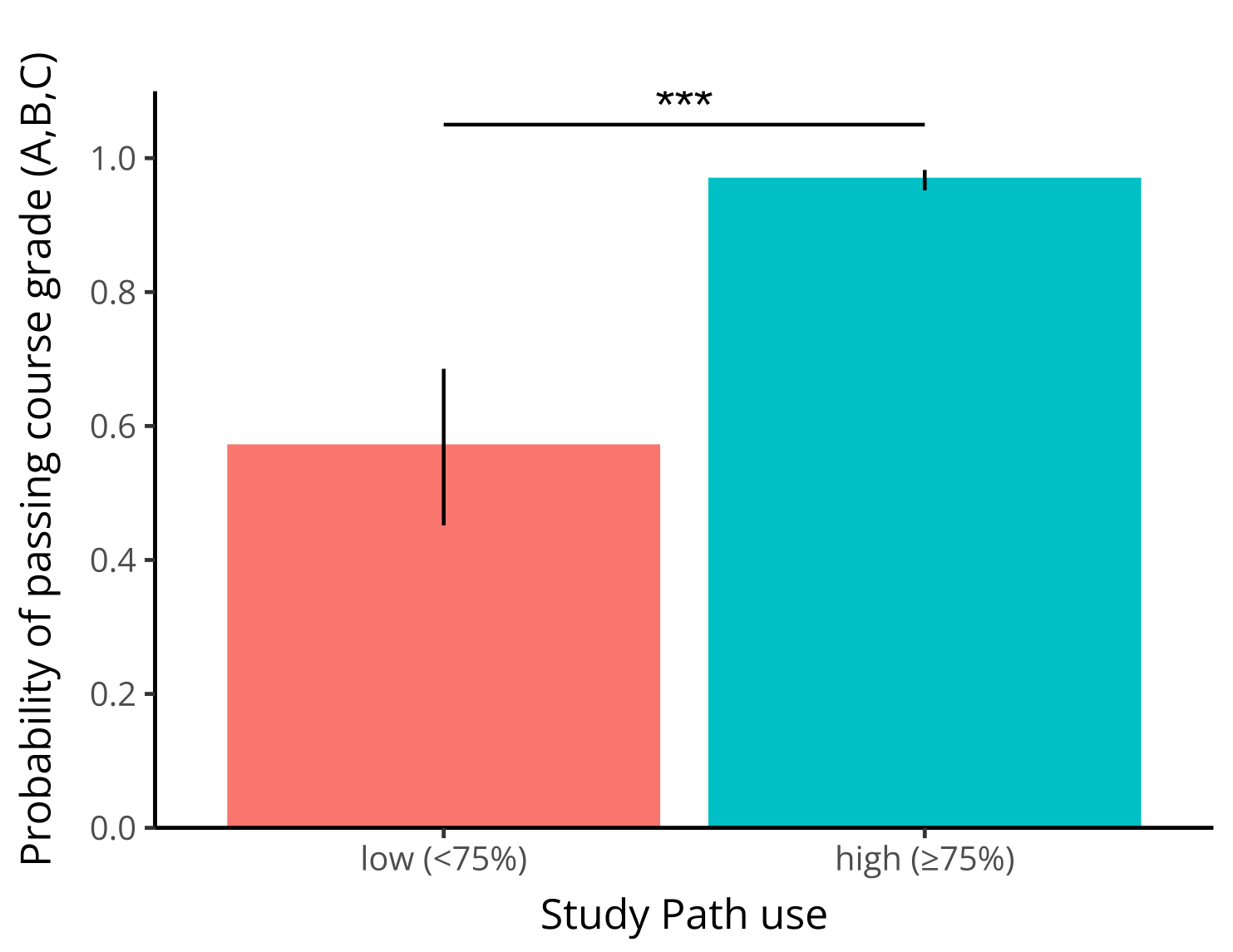
Study #1: The Study Path dramatically reduces failure rates in a high structure course.
In a first semester General Biology course that enrolls primarily freshmen, students who rarely used the Study Path had a roughly 60% chance of passing while frequent users were almost certain to pass. This analysis controlled for the grades that students had received in other courses that semester, meaning that the difference in success was due to differences in study path use, not differences in ability, preparation, or motivation. n = 654
Study in collaboration with Drs. Emma Feeney, Shauna Price, and Kristin de Nesnera at the Loyola University of Chicago. Data collected Fall 2024 and Fall 2025.
Study #2: The Study Path helps less-prepared students catch up with their peers.
To measure incoming preparation in a freshman genetics course, students took a pre-test (the GCA) in week 1. We then analyzed how students’ Study Path use predicted their score on each exam. Less-prepared students had a roughly 50% chance of earning a passing exam score when they used the Study Path infrequently. But when they used the Study Path regularly, gaps in passing rates between students with different levels of preparation almost disappeared. n = 436
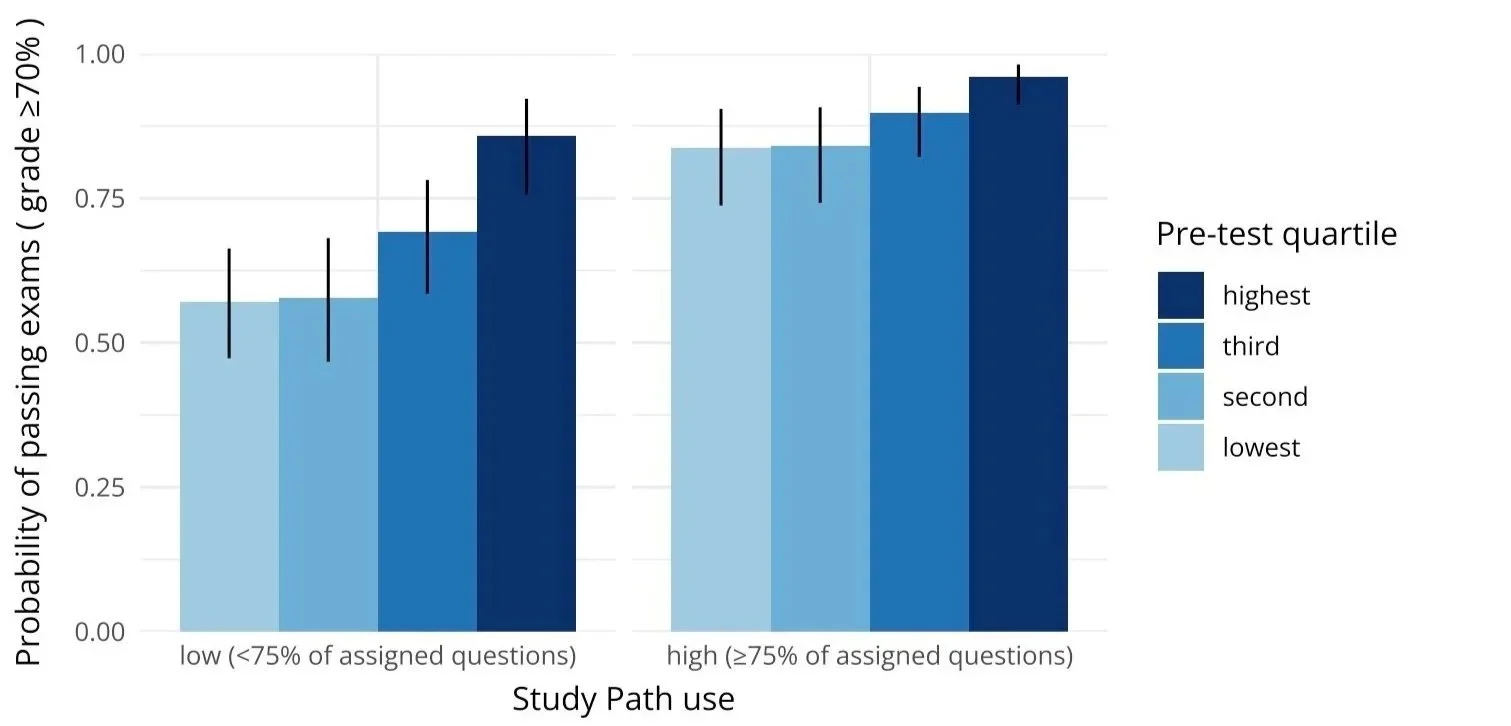

The Study Path improves course grades for all students.
To look at data from the same study a different way, we disaggregated student data by letter grade. The data graphed here show that high Study Path use leads to improved learning outcomes for all students, regardless of prior preparation.
The analysis includes data across three semesters in a first-year Molecular Biology and Genetics course. See full study here: Hazlett, Z. S., Jimenez, P. C., & Knight, J. K. (2025). Self-Testing and Follow-Through of Learning Strategies Supports Student Success. CBE—Life Sciences Education, 24(1), ar16.
Program Evaluation
Work with our team of discipline-based education researchers to evaluate the impact of Codon in your course.
Let us help with your program evaluation. As the examples below show, instructors like you are consistently seeing exam scores boosted by at least half a letter grade when students use the Study Path regularly. (These analyses were shared with permission of the instructors.)
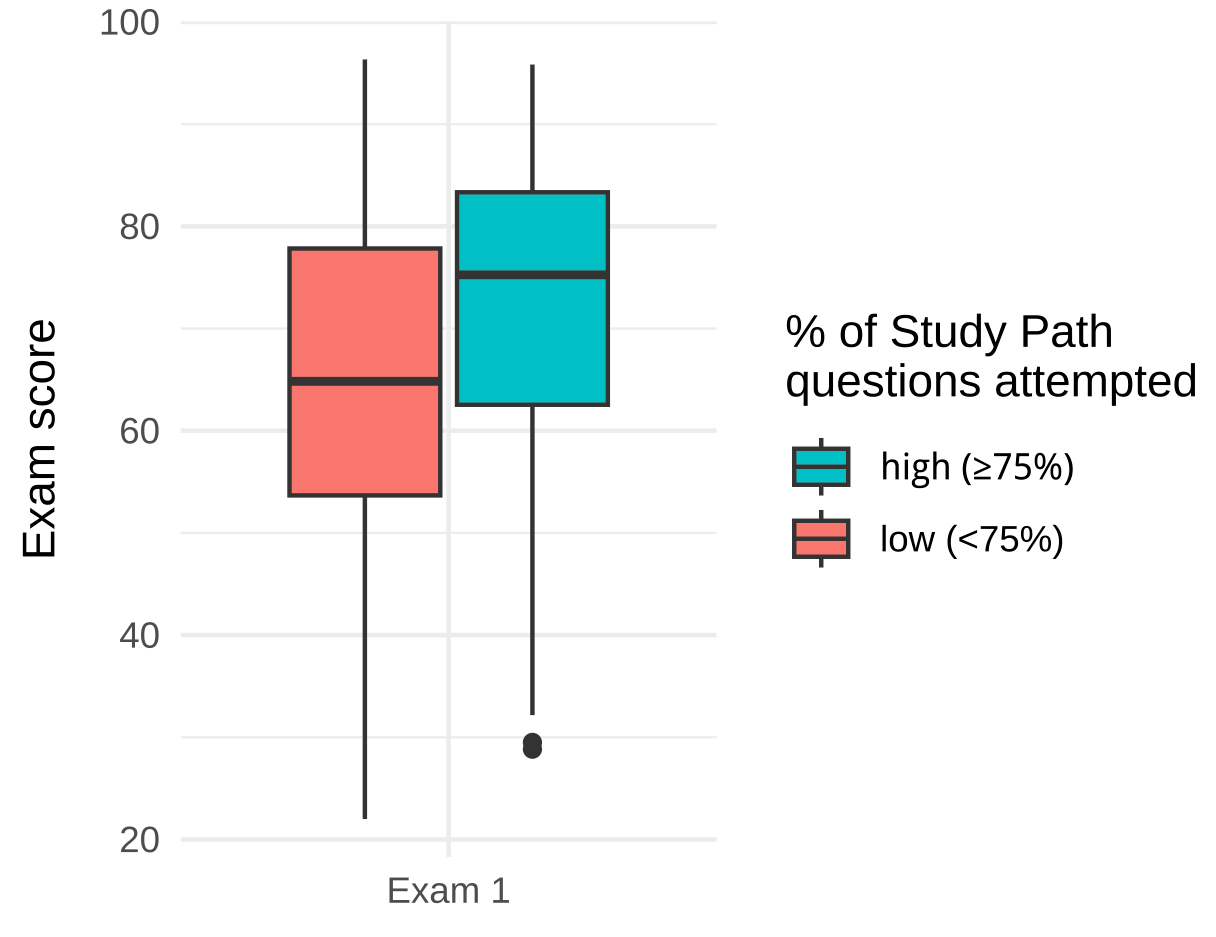
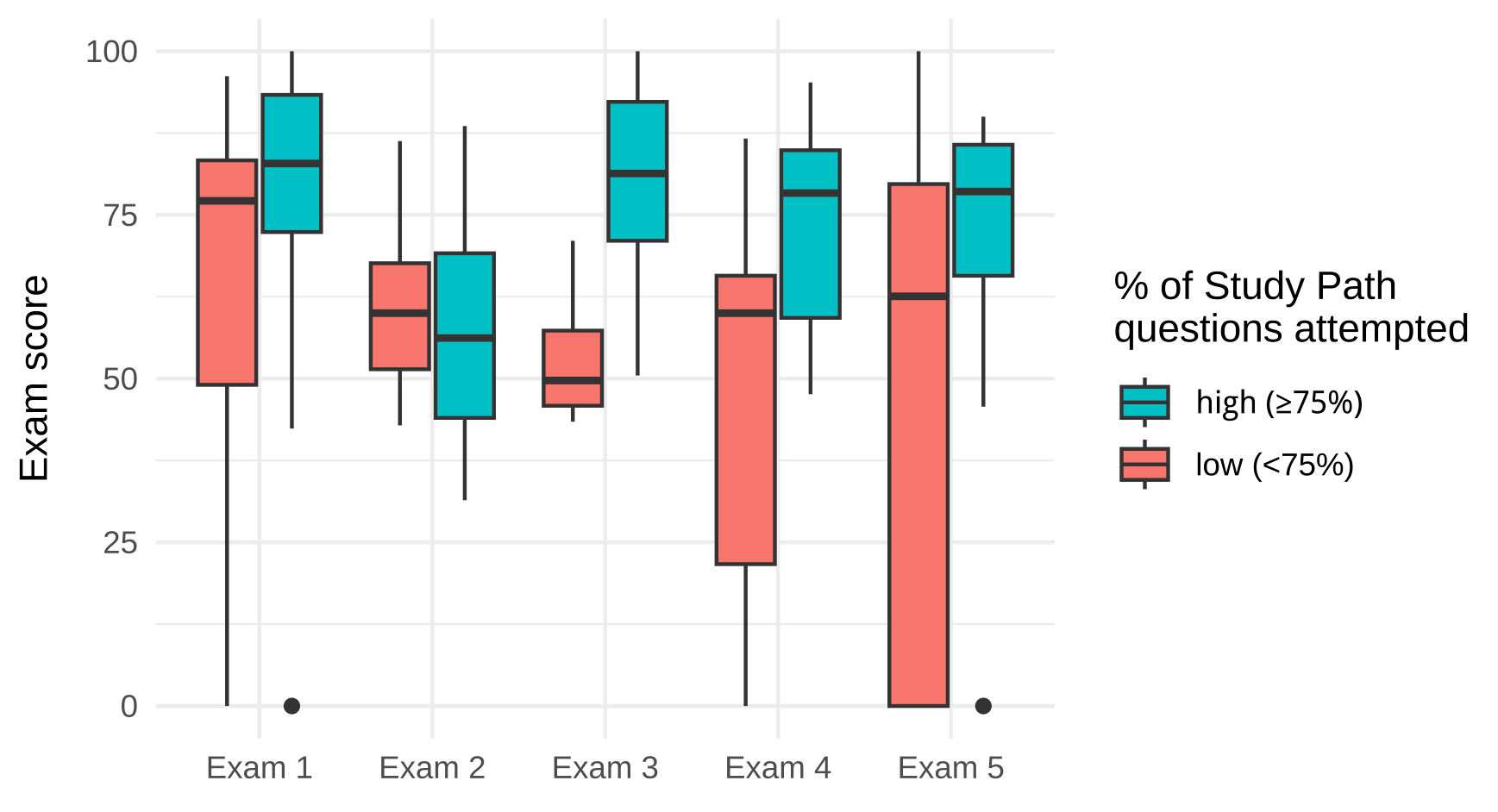
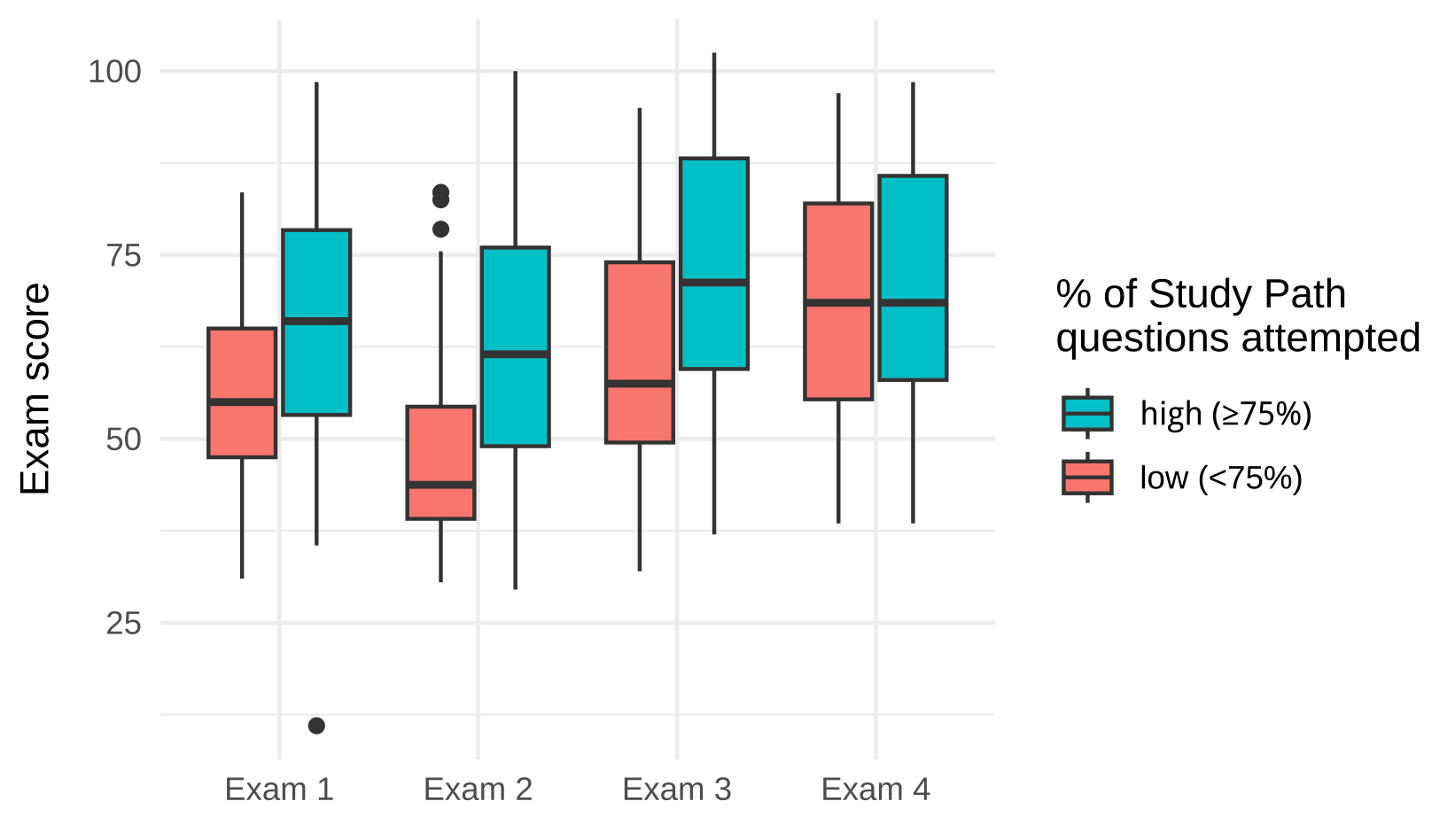
Does the Study Path boost exam scores IN YOUR CONTEXT?
We consistently see exam scores boosted by at least half a letter grade among students who use the Study Path regularly.
Our team helps you wrangle the data and answer that question!